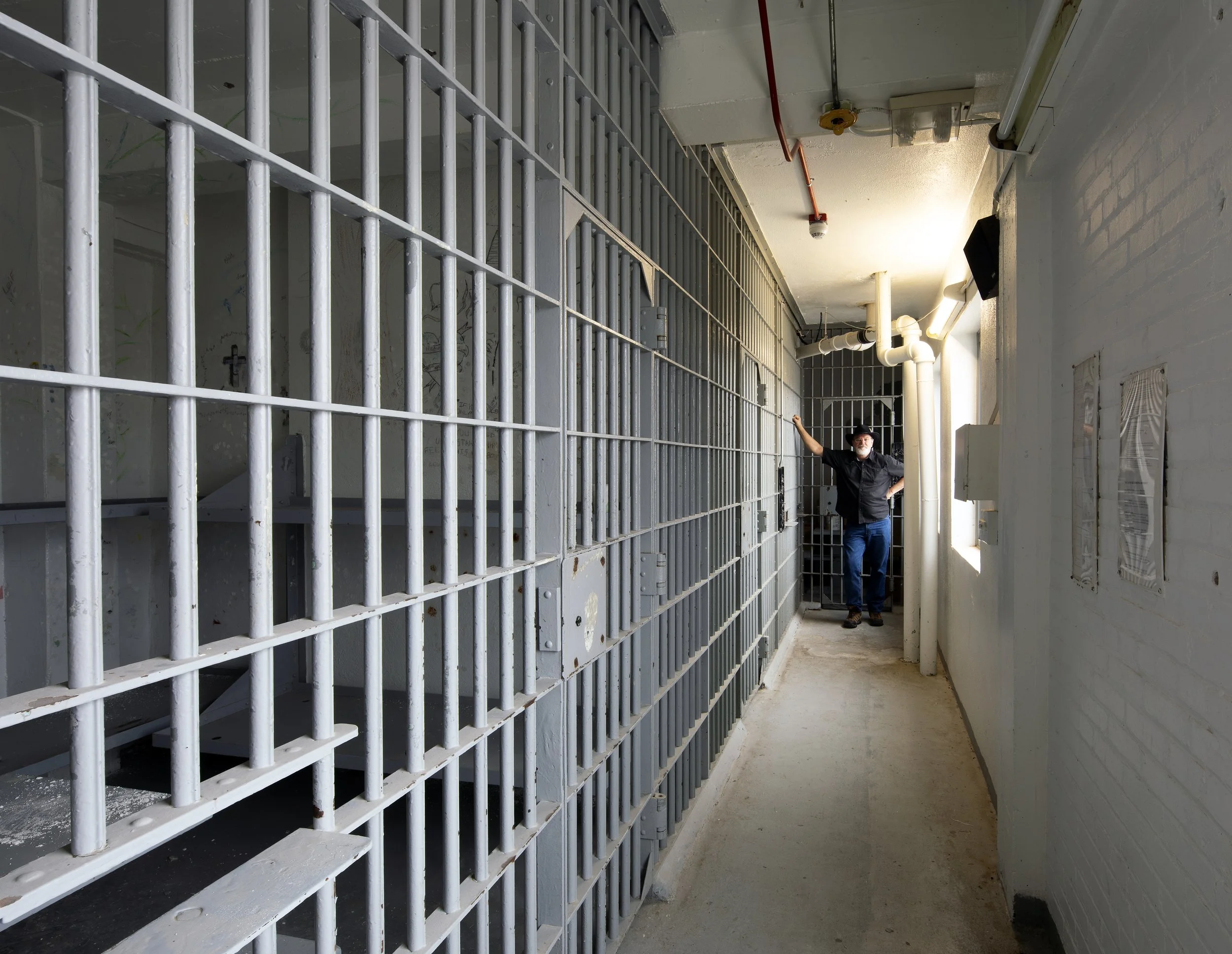
The Garfield County Courthouse is situated in the heart of downtown Enid, Oklahoma. Constructed between 1934 and 1936, it consists of five floors. County offices and courtrooms occupy the basement and first three floors, and the fourth and fifth floors house the old Garfield County Jail.
The old jail was refurbished in 1966 and remained in use until 2005, with the opening of the new county jail. During those 69 years of service, it housed many interesting people and has its own colorful story to tell—literally! In 1976, at the Garfield County Jail and Courthouse, ‘Jailhouse Art’ took a turn towards the exceptional.
Burgess and Paladine Roye, brothers from the Ponca Tribe, were arrested in 1976 in Enid, Oklahoma, for subsequent DUI’s and faced lengthy prison terms and hefty fines. Both were spared time in prison. Paladine was fined and his sentence was entirely suspended, as was most of Burgess’s. He was also fined and served six months in jail. In lieu of paying his fines, Sheriff McFadden made a deal with Burgess: If he would paint some art on the walls, he would talk to the judge and have his fines reduced or forgiven and would make Burgess a Trustee in the jail, allowing him greater freedom while imprisoned. With pigments, brushes, and concrete canvases, he paid his debts and gave the rest of us treasures of art on the jailhouse and courthouse wall. The artwork Burgess made in the jail marks the first time he had painted with oil.
When Paladine heard that Burgess was painting on the jailhouse walls, he came to the Sheriff and offered to paint one of his own.
These Ponca Tribe members would go on to make names for themselves within the Native American art culture, their pieces collected throughout the world, except for the ones that are forever part of the old Garfield County Jail and Courthouse, which have remained silent and mostly undiscovered. Until now.
The seven one-of-a-kind works by Burgess (born Oct 30, 1944, in White Eagle, Oklahoma) and Paladine Roye (born Dec 8, 1946, also in White Eagle), painted directly on the walls of the old jail and courthouse, are gems from two Native American artists for the Jail, the city of Enid, and the State of Oklahoma and truly national treasures deserving to be curated and preserved for future generations.
Unless you were incarcerated or worked there prior to 2005, you have never seen most of them, let alone heard anything about them.
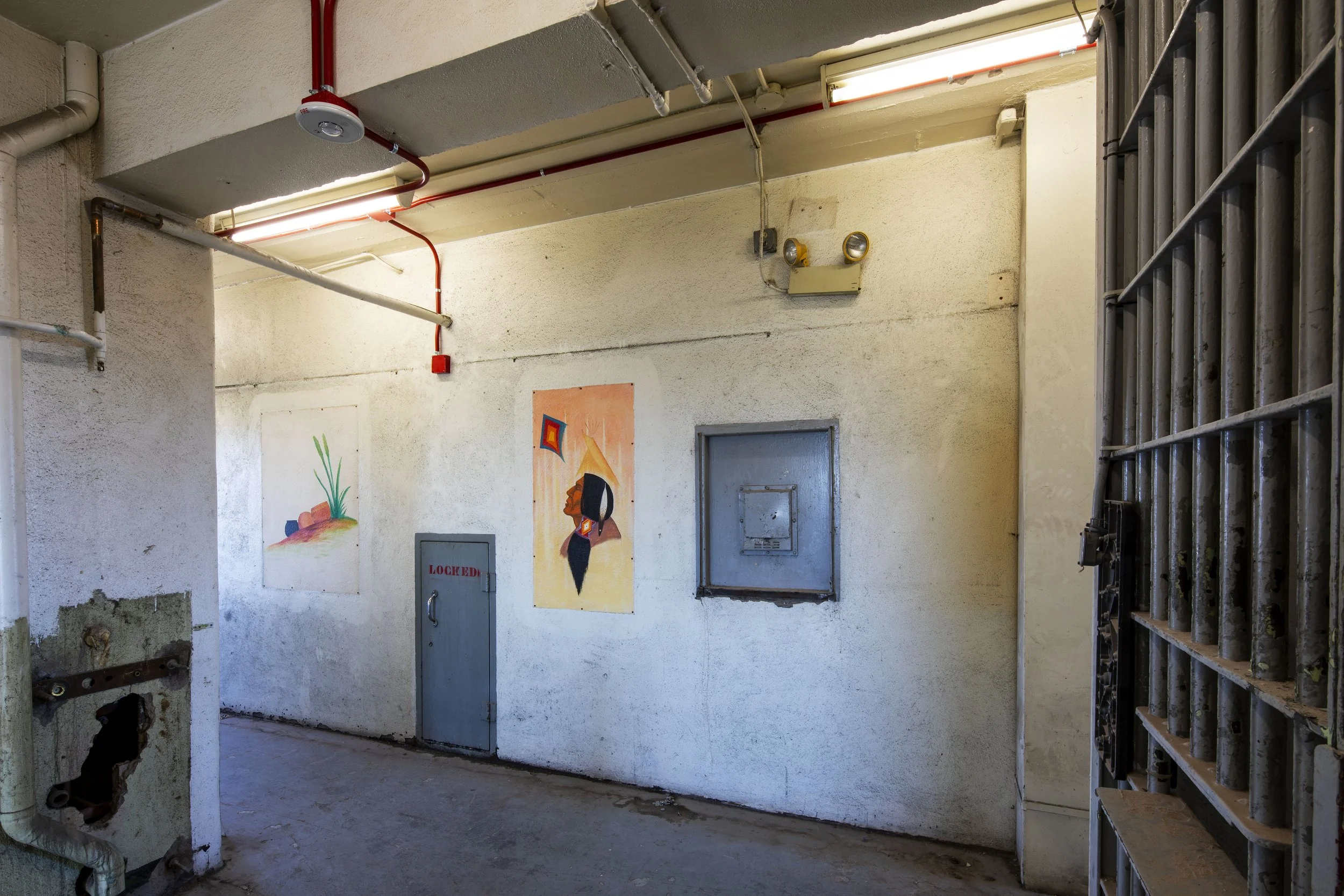
Six act as silent sentries in the old jail, and on the wall of the courthouse basement, one greets visitors who do not know the history behind it. All were painted directly on the bare concrete in 1976. They are the most hidden and unknown artwork of Burgess and Paladine Roye, done with a style that was not seen before now. We have not discovered if the brothers named or titled most of the paintings and the verbal history from some of those who worked there at the time does not include any information on that subject.
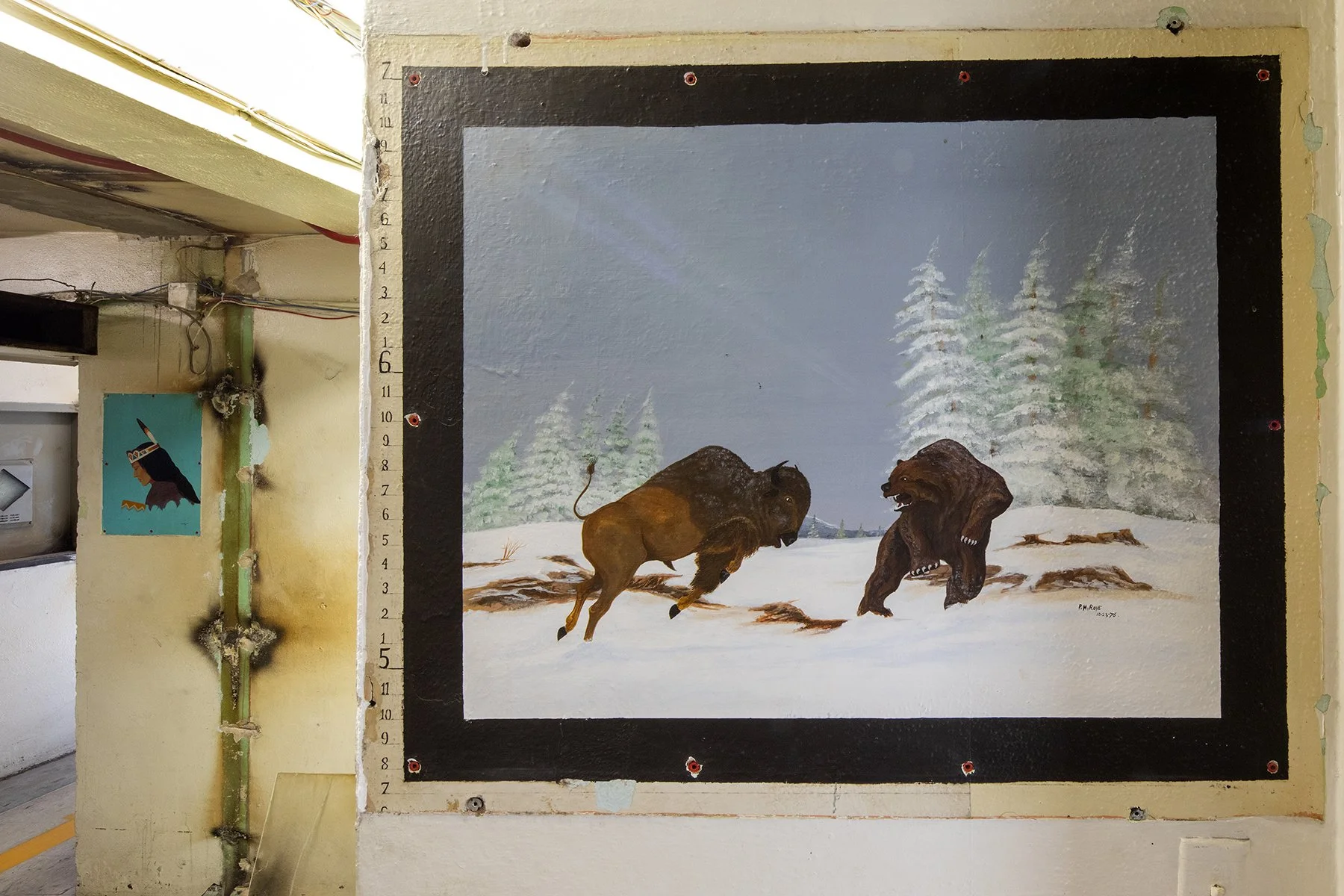
Paladine’s work depicts a buffalo and bear in conflict and represents the only known painting where he included both a buffalo and bear, let alone in conflict. He painted this piece outside of the entrance to the jail on the fourth floor, on the wall where booking photos were taken, directly across from the dispatch office. The old height markings can still be seen next to the painting. Three years after this, he began his professional art career.
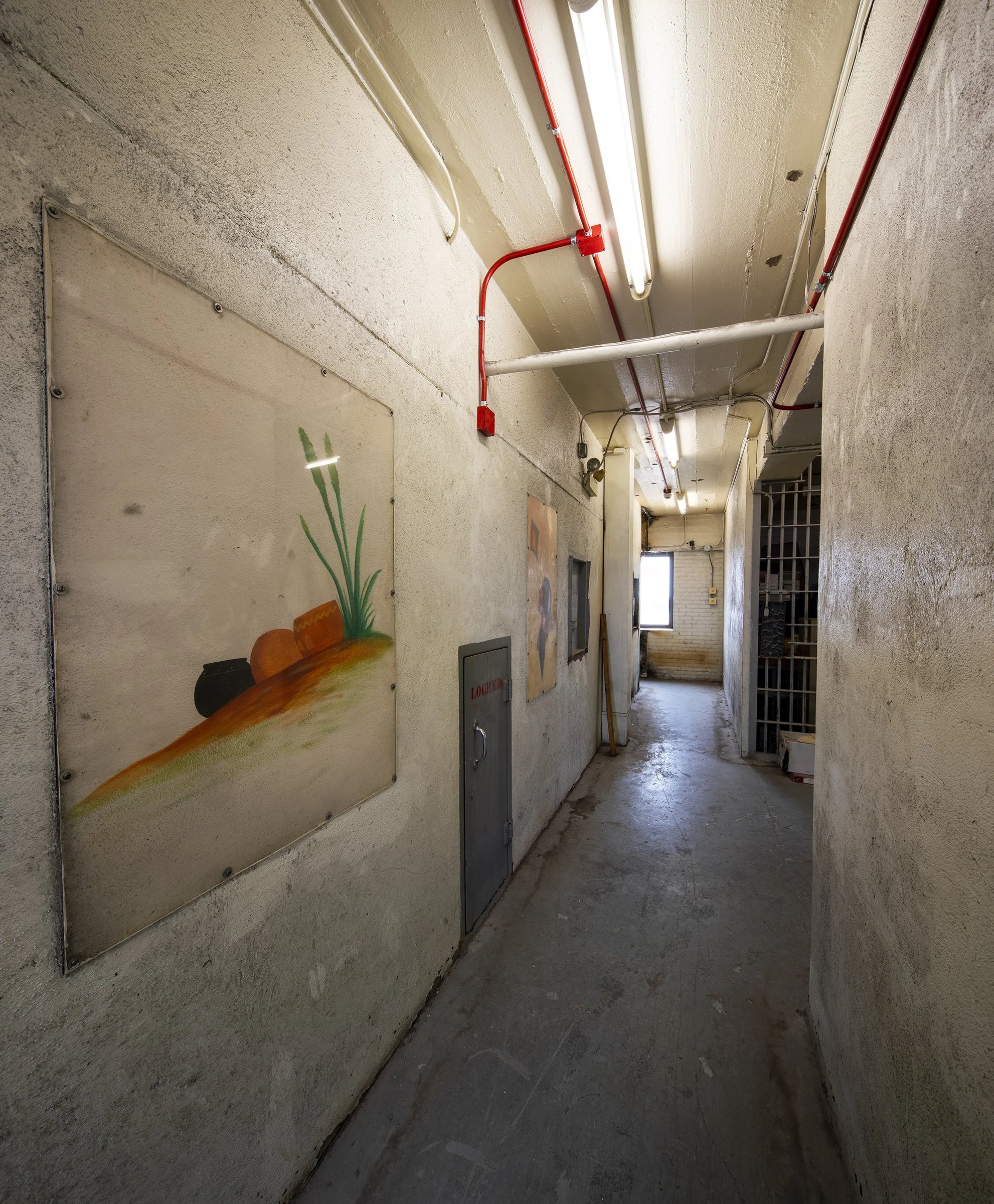
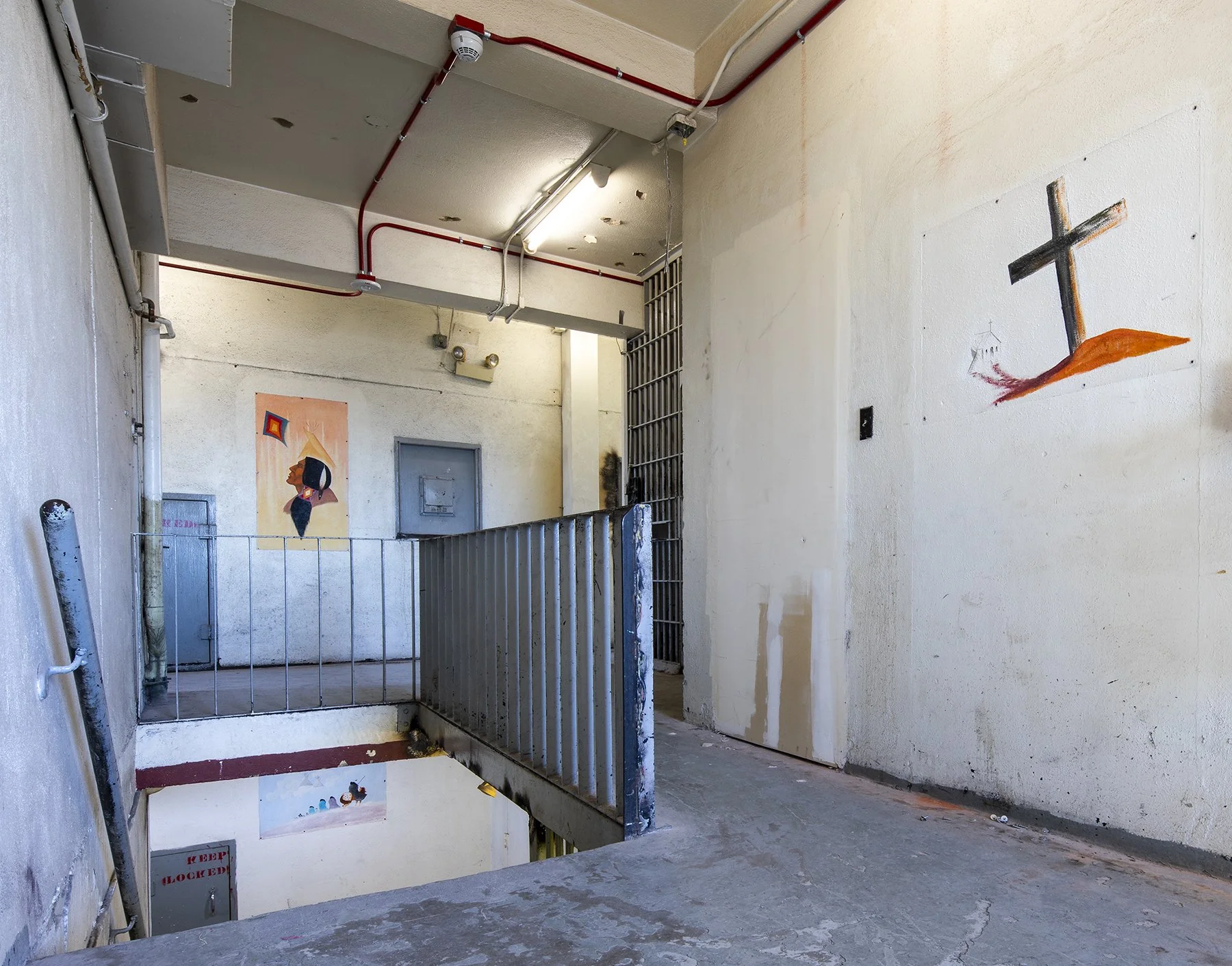
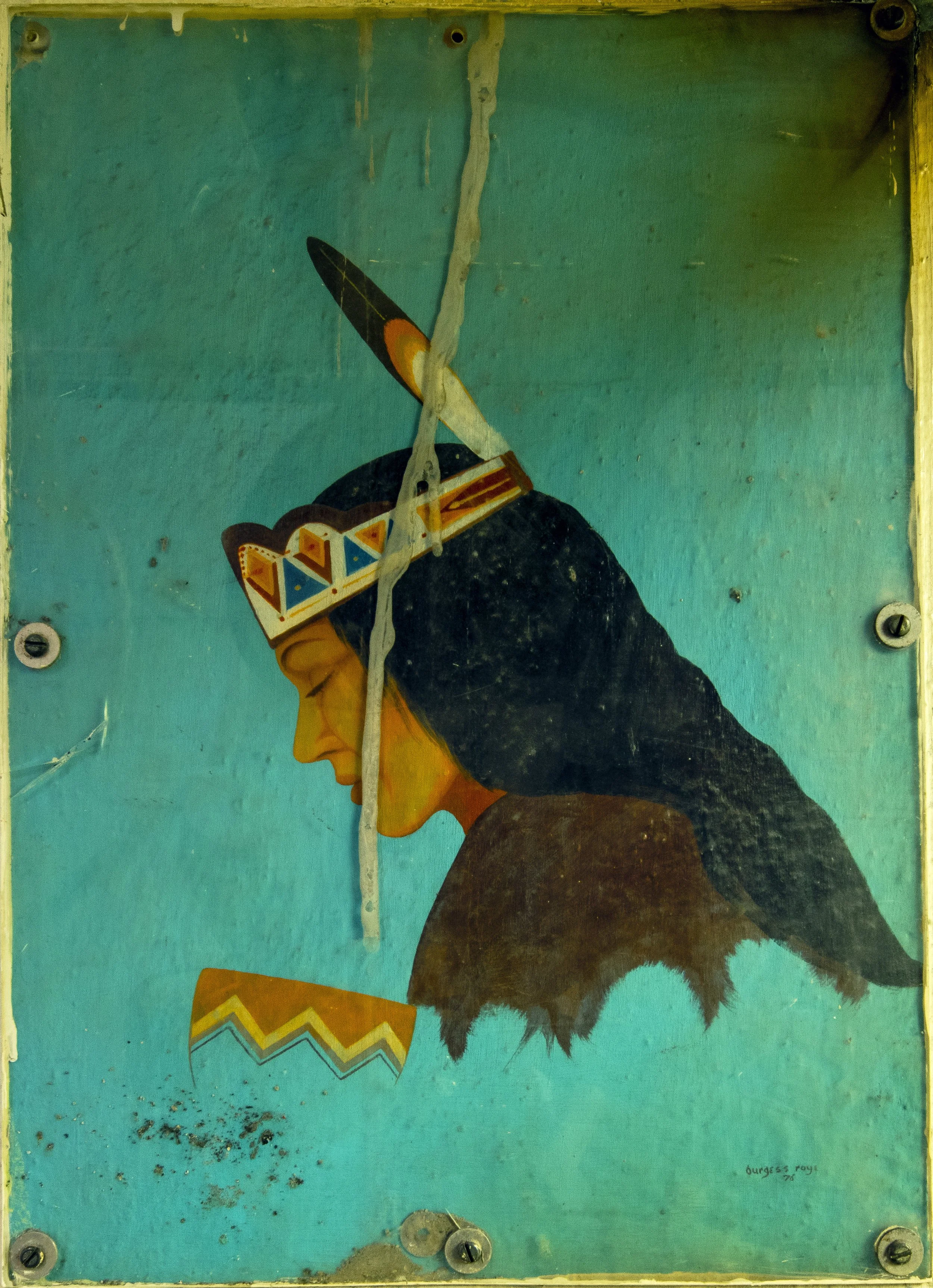
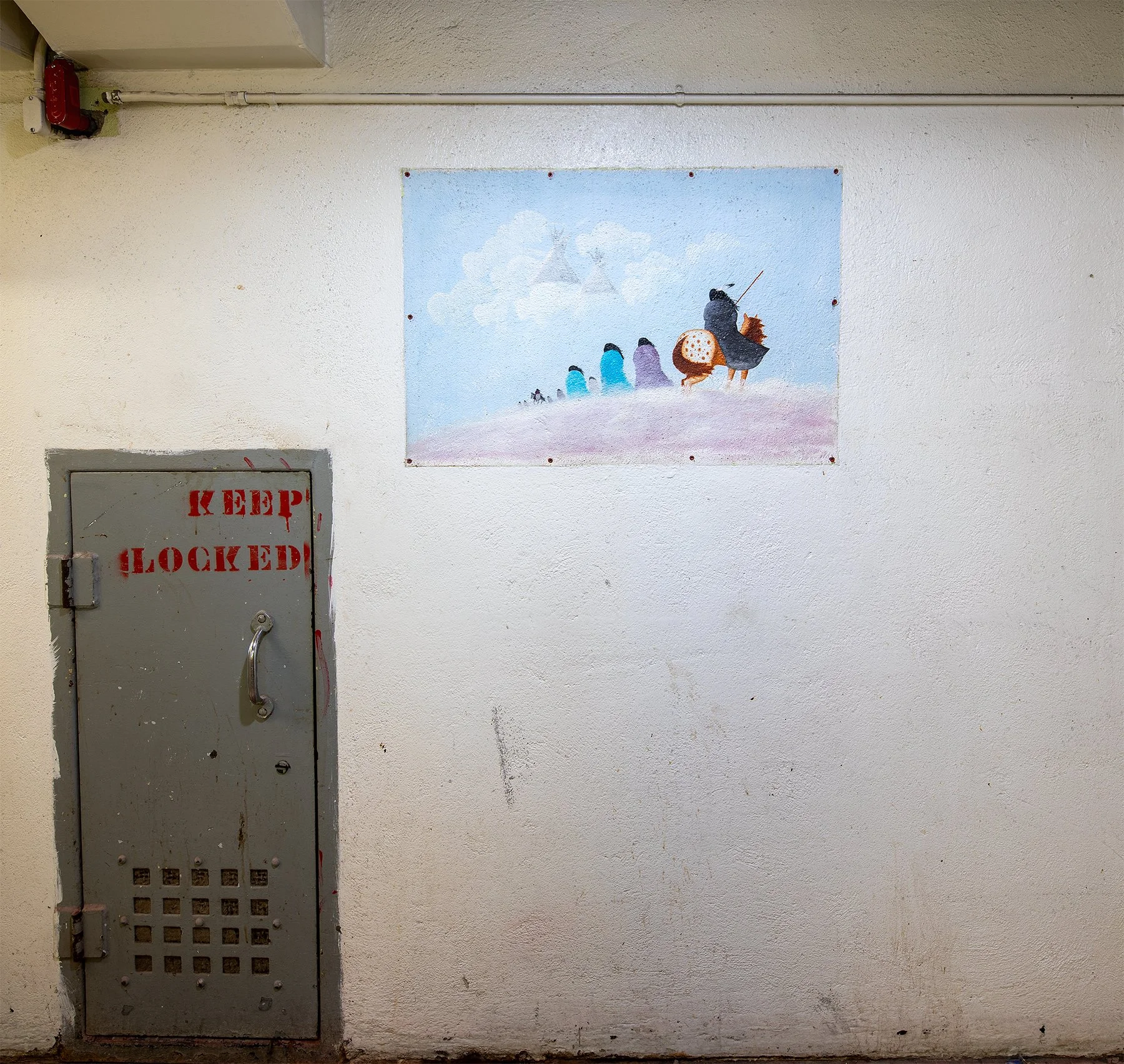
The works of Burgess in the jail include: a maiden set against a beautiful turquoise field, painted just inside the jail entrance; one depicting winter migration and the hunting grounds; one showing the Cross with a fine penciled outline of the Savior; one of a portrait of a warrior; and one featuring pots waiting to be used. The one large painting on the basement floor of the Courthouse depicts two warriors racing off to war, which he titled ‘Speeding Shadows of Another Time.’ Burgess signed and dated the painting and wrote a poem to go with the art, which is attached to the front of the painting and is shown in the video below.
The other pieces that are signed and dated are Paladine’s piece and Burgess's maiden and the one with the cross . All of these are dated ’76 (1976), which agrees with all of the verbal and written history of the paintings in the jail.
Paladine’s painting was signed and finished by him on October 23, 1976. This is three years before Paladine announced that he would be painting as a professional. This is also the same day and year that the 6-month jail sentence given to Burgess was stamped by the Clerk of the Garfield County Court. October 23 is also the date we started this photographic documentary. We discovered all this on, you guessed it, October 23.
Thanks to Garfield County for permission and facilitation, this is the first time these historic paintings have been photographed without the protective plastic that has been covering them for almost 45 years, so that their beauty can be truly appreciated, and this is the first time they are being made available to the public.
Thanks to Deputy Dustin Musick for introducing me to this awesome art and history.
Thank you to Chairman of the Oklahoma Ponca Tribe, Oliver Littlecook Sr, for his enthusiastic support of the project. He was not aware of the jailhouse art until this project brought it forward. Oliver was Chairman of the Oklahoma Ponca Tribe at the beginning of this project.
I have asked Chairman Oliver if there is any symbolism within the jailhouse paintings that would be specific to the Ponca Tribe and he said he didn't see anything that was, but the painting where the red from the cross goes to the tipi and church seemed to say to him that both the Ponca beliefs and Christian beliefs lead to the same God.